
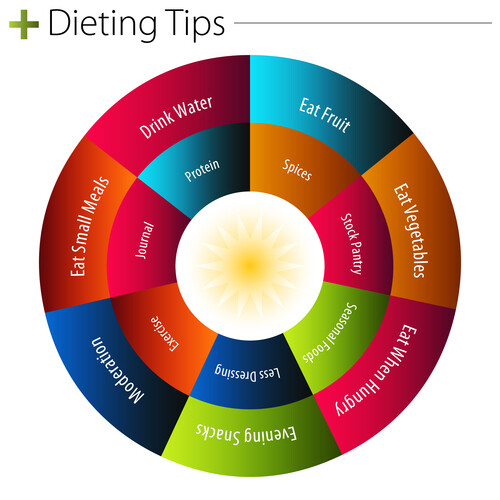
Wise Dieting For Lowering Calories
Wise Dieting Is Just As Important As Exercise
 “You are what you eat” is an age old saying that has stuck around for a long time. There’s a reason for that – it’s true. No matter how much you workout, your diet has just as big of effect on achieving your weight loss goals. You can talk to any trainer and if he/she is honest they will tell you 80% of achieving your weight loss goal is from wise dieting.
Everything you eat counts, including snacks!
One bad meal or one bad day of eating will not make you fat…but eating junk food on a daily basis for 2 to 4 weeks will more than likely affect your weight. Many people think they are eating healthy, maybe even tracking their food intake for the day (great idea). The problem for some is they do not track everything. Snacks count and eating or binging on an unhealthy snack in the mid afternoon or late evening count! Be sure you track everything, to be honest with yourself.
How fast can you see results by eating healthier?
Depending on your current condition when you first start wise dieting. Obese people can see huge weight loss in the beginning, as much as 2-4 pounds per week. If you are already in moderately good shape you will more than likely not see such huge weight loss results. You aren’t looking to lose as much so a half to a pound a week would be great. Your physician will be able to tell you what to expect.
What are the best ways for wise dieting?
The Caloric Deficit – Your daily caloric deficit will determine how much weight will come off in a week or month. One pound of body weight is equal to 3,500 calories.
To lose 1 pound per week you need to have a deficit of 500 calories every day. There are 2 ways to produce your daily/weekly calorie deficit goal: through exercise or through dieting, I recommend doing both.
Reduce your calorie intake by 250 then burn 250 by going for a walk or do a 20 minute workout at a pace you can handle. Always check with your physician before starting any diet or workout routine.
Never get discouraged or beat yourself up if you do not achieve a caloric deficit of 250 calories or less. We all experience low points during our weight loss journeys. The important thing is that you stay motivated, do your best to count wise calories and you make an effort to bounce back so you can start losing that weight!
Avoid Hidden Sugars
Refined sugar and high fructose corn syrup are commonly added to commercial foods and beverages as sweeteners and should be avoided at all costs. Stop drinking soda all as soon as possible and switch to flavored water. You will be shocked at how much sugar manufacturers put in their products. A small cupcake can have as much as 24 grams of sugar!
High fructose corn syrup is becoming even more common in food because it’s cheaper to produce than sugar, which is derived from sugarcane.
Simple carbohydrates like refined sugar and HFCS should be avoided as often as possible because they bog down your metabolism and also affect how your body responds to insulin.
Insulin is a natural hormone in our bodies that facilitates the absorption and utilization of blood glucose. How your body responds to insulin has a direct impact on your metabolism.
Excess sugar in your diet (especially in the form of HFCS) has been shown to cause some degree of insulin resistance, which affects how your body responds to excess blood sugar.
3. Refuel with Vegetables & Fruit – Hunger is an old enemy that often beats even the toughest dieter. When hunger pangs are not addressed properly, you may feel fatigued and agitated.
This can affect your mindset regarding exercise and further wise dieting. To avoid this scenario, increase your consumption of vegetables and have fresh fruit to sweeten the deal.
Protein-rich vegetables like white beans and lentils are excellent “hunger busters” as they provide a moderate amount of carbohydrates in addition to lots of protein.
Plant proteins can help stop hunger pangs and keep you focused on your calorie deficit goals. Green leafy vegetables, on the other hand, are naturally high in dietary fiber which helps fill up the stomach when digested.
How much fruit should you eat?
There is a general belief that you can eat as much fruit as you want because it’s wholesome, natural food. I agree that fruits are great in making a diet balanced and nutritious.
However, you should keep in mind that many fruits are high in natural fruit sugars and they can pack a lot of calories in every serving. Eat only a small quantity of fruits per day to benefit from the nutrients. Save the rest for tomorrow!
Don’t miss out on this massive deal! Click here to unlock the complete GOT2MANUP Fitness Blueprint with 13 must-have resources before this limited-time bundle disappears.

Sources
-
Mayo Clinic overview of healthy eating and calorie control tips
https://www.mayoclinic.org/healthy-lifestyle/nutrition-and-healthy-eating/in-depth/calories/art-20048065 -
Harvard School of Public Health guide to balanced diets and sustainable calorie reduction
https://www.hsph.harvard.edu/nutritionsource/healthy-weight/weight-loss-tips/ -
CDC guidance on nutrition basics, eating patterns, and weight management
https://www.cdc.gov/healthyweight/healthy_eating/index.html -
NIH National Institute of Diabetes and Digestive and Kidney Diseases article on portion control and healthier eating habits
https://www.niddk.nih.gov/health-information/weight-management/health-tips-healthy-eating -
Cleveland Clinic tips for mindful eating, calorie awareness and lifestyle changes for better health
https://health.clevelandclinic.org/ways-to-reduce-calories-without-feeling-deprived/
FAQs
Q: What does “lowering calories naturally” mean?
A: It means reducing your calorie intake through everyday food choices and habits rather than extreme dieting, focusing on whole foods, portion control, and balanced meals.
Q: Can eating more vegetables help reduce calories?
A: Yes. Vegetables are nutrient dense and lower in calories, which can help you feel full while naturally reducing overall calorie consumption.
Q: Does drinking water affect calorie intake?
A: Drinking water before meals can help you feel fuller and often leads to eating smaller portions, which helps lower total calories.
Q: Is skipping meals a good way to lower calories?
A: No. Skipping meals often leads to overeating later and can slow your metabolism, making long-term calorie control harder.
Q: How does mindful eating help with calories?
A: Mindful eating encourages paying attention to hunger and fullness cues, which helps prevent overeating and reduces calorie intake without strict rules.
Q: Will lowering calories naturally make me lose weight?
A: It can. When combined with regular physical activity and healthy eating habits, lowering calories naturally supports weight loss and better overall health.